
‘Pampa: Textiles of Karnataka’ Exhibition Showcases Centuries-Old Weaving Traditions, Urges Support for Artisans and Handloom Revival
Bengaluru: Karnataka’s centuries-old textile legacy, built on the extraordinary craftsmanship of its weavers and the cultural traditions of different regions, deserves greater national and global recognition, Union Minister Gajendra Singh Shekhawat said.
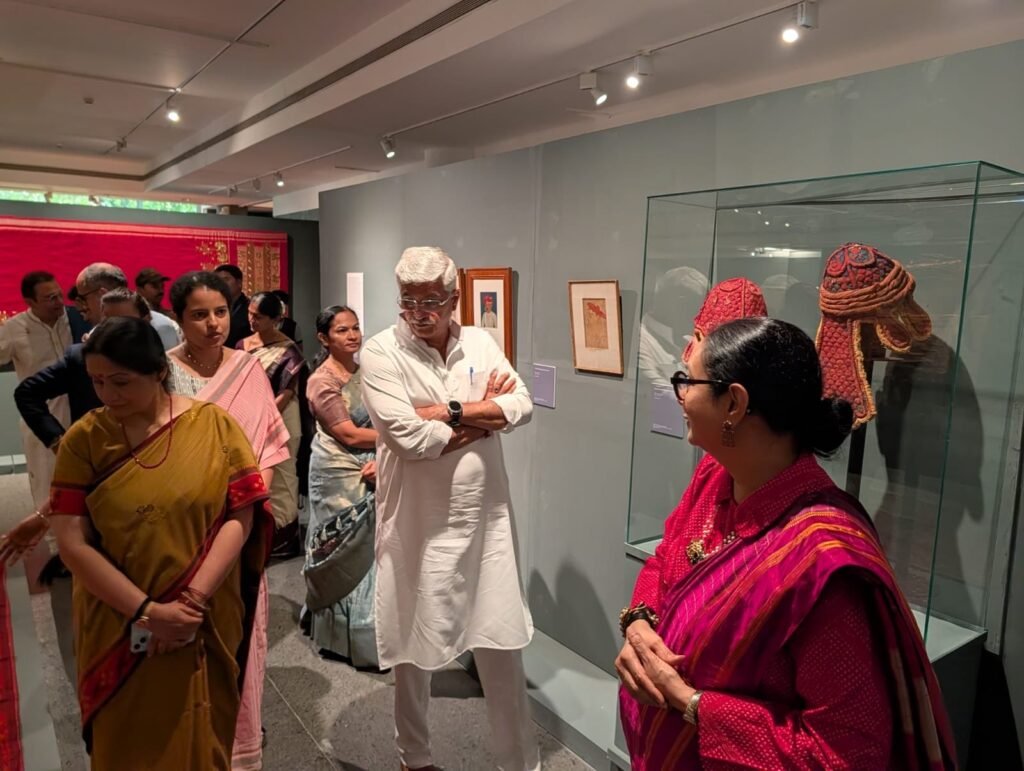
Speaking after inaugurating the ‘Pampa: Textiles of Karnataka’ exhibition at the National Gallery of Modern Art (NGMA), Bengaluru, on the occasion of Karnataka Rajyotsava, the Union Minister highlighted the need to preserve traditional weaving practices while creating new opportunities for artisans through innovation, marketing and global outreach.
“Karnataka’s textile heritage is a living expression of India’s rich cultural identity. Every weave carries the story of history, communities, traditions and generations of artisans who have protected these art forms through centuries,” he said.
The Minister pointed out that Karnataka’s textile traditions have deep historical roots, with textiles and fabrics from the region being traded with European and Arab countries for centuries. The textile economy flourished during the rule of prominent dynasties such as the Kadambas, Rashtrakutas and Chalukyas, reflecting Karnataka’s important role in India’s historic trade networks.
Among Karnataka’s iconic handloom traditions, Ilkal Sarees of North Karnataka hold a special place. Dating back to the Early Chalukya period around the 7th century, Ilkal Sarees continue to remain popular across the Deccan region, including Maharashtra, Telangana, Andhra Pradesh and Goa.
The Minister also highlighted the global reputation of Mysore Silk Sarees, which continue to be an aspirational choice for millions of women across India. He recalled the importance of other traditional textiles such as Molakalmuru Silk Sarees, Udupi Sarees, Charaka Sarees, Bangalore Silk, Yadgir furnishing fabrics, Sandur Lambani textiles and Dharwad Kasuti embroidery as symbols of Karnataka’s diverse cultural heritage.
The revival of the Anekal Saree was also appreciated as an example of bringing forgotten traditional weaves back into public attention.
Need to Promote Karnataka Weaves
Calling upon citizens to become ambassadors of Karnataka’s weaving traditions, Shekhawat urged people to wear and promote Karnataka sarees, stating that consumer support is essential for the survival and sustainability of the weaving community.
“The more we support our traditional weaves, the stronger our artisans and weaving ecosystem will become,” he said.
A New Vision for Karnataka’s Textile Sector
The Union Minister appreciated Karnataka’s new Textile Policy, describing it as a shift from a welfare-based approach towards a commercially sustainable, artisan-centric economic model.
He stressed the importance of strengthening handloom clusters through better design support, innovation, branding, marketing and export opportunities.
He also called for stronger Centre–State cooperation in areas such as:
Establishing a dedicated national mission for handloom revival and development.
Creating special funds to protect traditional and heritage weaves.
Setting up design and innovation hubs in major handloom regions.
Developing a national marketing and export strategy to position handloom products as contemporary lifestyle and fashion products.
Strengthening handloom institutions and encouraging public-private partnerships.
Baldota Foundation’s Contribution Recognised
The Union Minister appreciated the contribution of the Abheraj Baldota Foundation towards supporting Karnataka’s weavers and preserving the state’s traditional textile heritage.
He said that collaboration between government institutions, corporate organisations, foundations and weaving communities would play a crucial role in strengthening the textile ecosystem.
According to the 2018 Census, Karnataka has around 55,000 handloom weavers and nearly 1.25 lakh powerloom workers, making the textile sector an important source of livelihood for thousands of families.
Preserving Heritage While Building the Future
The exhibition served as a reminder that India’s cultural heritage is woven not only through fabrics but also through the dedication, creativity and struggles of artisan communities.
Emphasising the vision of “Vikas Bhi, Virasat Bhi” (Development along with Heritage), Union Minister Gajendra Singh Shekhawat said that preserving traditional crafts while connecting them with new generations and global markets is the need of the hour.

